By: Mukhtar Yahaya Shehu
The Kano State Government has taken a significant step toward strengthening public health preparedness with the successful completion of a two-day workshop on Bio-risk Management and Zoonotic Disease Sample Collection, held from April 10–11, 2026.
The training was organized by the Ministry for Livestock Development in collaboration with the Kano State Centre for Disease Control (KNCDC), with support from the Core Group Partners Project.

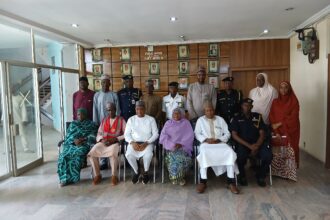
The workshop brought together Disease Surveillance and Notification Officers (DSNOs) from seven Local Government Areas: Doguwa, Tofa, Takai, Kura, Dawakin Tofa, Kumbotso, and Bunkure, alongside key state level stakeholders in surveillance, laboratory services, infection prevention and control (IPC), and data management. These seven Local Government Areas are the high‑burden areas for zoonotic diseases in Kano State.
The primary objective of the training was to enhance the capacity of frontline health workers in bio-risk management, improve the safe collection and handling of zoonotic disease samples, and strengthen surveillance and reporting systems across the state.

The initiative also emphasized the One Health approach, promoting collaboration between human, animal, and environmental health sectors.
Participants underwent intensive technical sessions, practical demonstrations, and interactive discussions covering bio-risk assessment, infection prevention and control practices, proper sample collection and transportation, and effective data reporting systems. Speaking at the close of the workshop, a state health official noted that the training has significantly improved the technical capacity of surveillance officers and reinforced the importance of timely and accurate disease reporting in preventing outbreaks.

In a statement signed by Director General Kano center for Disease Control Professor Muhammad Adamu Abbas said the workshop also provided a platform for participants to share field experiences and challenges, including limited access to remote communities, delays in sample transportation, and resource constraints. These discussions helped identify practical solutions and foster stronger collaboration among stakeholders.
Key outcomes of the workshop include: improved technical knowledge among participants, strengthened inter-sectoral collaboration, and renewed commitment to enhancing disease surveillance systems at the local government level.
To sustain the gains achieved, stakeholders agreed on several next steps, including intensified community sensitization, strengthening Emergency Preparedness and Response (EPR) structures, improving stakeholder engagement, and integrating the One Health approach into surveillance and IPC systems.
The Kano State Government reaffirmed its commitment to continuous capacity building, improved logistics, and enhanced community engagement to ensure effective prevention and response to zoonotic diseases.