By: Mukhtar Yahaya Shehu
Kano state government has reiterated its commitments to work with relevant stakeholders for improving and addressing the health challenges across the state.
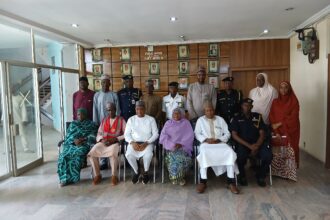
The state commissioner for Health Dr. Abubakar Labaran Yusuf announced this during a One day Roundtable discussion with health sector leadership and the media to strengthen ability to generate evidence-based stories and shape public discourse organized by Kano state ministry for Health in collaboration with International society of Media and Public Health ISMPH, EngenderHealth Consortium partners and Unified Health media Network in Kano.
He said journalist playing a vital role in sensitizing and enlightened the public on any issue that may arise in order to get the solutions.
According to Dr Abubakar Labaran Yusuf in many years ago people see journalist as a very reliable source of any information and agreed with good confidence.
” Journalism is a something that I see as a very important tool in the public arena, because many people see Journalist as a very reliable source of information.” Dr Abubakar Labaran added
Dr Abubakar Labaran Yusuf pointed out that, the meeting is timely, considering the commitment of Kano state government in addressing the challenges of maternal and Neonatal moterlity in the state.
” This is the 3rd time I presiding the meeting like this with journalist in order to remind or to educate them about the ethics of health reporting. The things that need from the journalist is any information came out from them should be absolutely truth, any information that is going to be a positively imfactable information disseminate to the public, but if it negatively imfactable information please keep it for your self.”The commissioner said
The Commissioner commended Governor Abba Kabir Yusuf for the approving of anything has to do with budget on the health sector in order to make the state people Healthy.
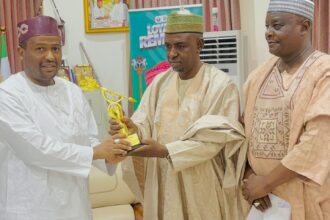
Dr Abubakar Labaran Yusuf also thanks the ISMPH for organizing the meeting aimed to improve the health sector coverage in the state.
Speaking earlier, the Executive Director International society of Media in Public Health ISMPH Mrs Moji Makanjuola said the purpose of the meeting is to generate evidence-based stories and shape public discourse on health issues in Kano state.
Mrs Moji Makanjuola represented by the Program Director ISMPH Mr Solomon Dogo commended the Kano state government for its commitment to improving health outcomes and for recognizing the indispensable role of the media as a strategic partner in health systems strengthening and public accountability.
“I would also like to acknowledge our consortium partner (CCSI and LISDEL), EngenderHealth, as well as our development partners, civil society organizations, and members of the media whose continued collaboration is helping to advance equitable, resilient, and people-centered health systems.” She said
According to Mrs Moji Makanjuola in today’s information age, the media is far more than a channel for disseminating news. It is a powerful force for shaping public perception, influencing policy conversations, encouraging healthy behaviours, and promoting accountability. Equally, our health institutions generate a wealth of data and evidence that, when properly interpreted and communicated, can inspire informed public dialogue and support better decision-making.
She further said valuable health information often remains underutilized because technical data is not always translated into messages that resonate with the public or stimulate meaningful action.
The Executive Director also said the roundtable seeks to bridge that gap,it provides a unique platform for health leaders, media practitioners, development partners, and civil society organizations to examine how evidence generated through Integrated Supportive Supervision (ISS), RMNCAH indicators, PHC Facility Assessment Tool (PHC-FAT) scorecards, and health insurance data can be transformed into compelling, accurate, and solutions-focused stories that improve public understanding, strengthen accountability, and support better health outcomes across kano State.
“Our objective is not merely to review statistics or performance indicators. Rather, it is to collectively interrogate what the data tells us about the realities within our health system, celebrate areas of progress, identify persistent gaps, and explore how evidence can be communicated in ways that empower citizens, strengthen trust, and influence positive policy and behavioural change.
According to her, as Nigeria’s commercial capital and one of Africa’s largest and most dynamic cities, kano occupies a unique position in driving innovation and setting standards across many sectors, including health. The state has made commendable investments in primary health care, health insurance expansion, digital health innovations, and maternal and child health services. Yet, like every health system, opportunities remain to strengthen service utilization, improve equity, and ensure that every resident has access to quality healthcare. Achieving these goals requires informed citizens, responsive institutions, and a media landscape that is equipped to communicate health evidence accurately and responsibly.
“At ISMPH, we firmly believe that when health institutions and media professionals work in partnership, evidence becomes more than numbers on a report, it becomes a catalyst for informed public discourse, stronger accountability, and improved health outcomes.
As we engage throughout today’s programme, I encourage us to participate openly, listen actively, and focus on practical solutions. Let us seize this opportunity to deepen collaboration, strengthen mutual understanding, and develop concrete commitments that will advance evidence-based reporting and enhance public accountability within the health sector.” Mrs Moji added
She also pointed out that at the end of the dialogue, meeting hope to achieve a shared understanding of key health sector priorities and performance data, strengthen the capacity of journalists to produce high-quality evidence-based stories, identify actionable story angles, and reinforce partnerships among government, the media, civil society, and development partners.
In their welcome remarks, the Director General Kano state primary Healthcare Management Board Professor Salisu Ahmad Ibrahim his counterpart from state Drugs Management Agency Pharmacist Ghali Sule and the Executive Secretary state Contributory Management Agency KSCHMA Dr Rahila Aliyu Muktar thanks the ISMPH for organizing the meeting in its effort to escalate all the activities of the health sector in the state.
In her goodwill massage, the Kano Health Journalist Network KAHJON Chairperson Hauwa Sulaiman Zahraddin expressed their readiness in reporting anything concerning the health sector across the state objectively.
According to Chairperson KAHJON was inaugurated recently with the support of ISMPH and appreciate the effort of ISMPH for supporting the coordination and in pulling out media personnel from other networks to form a Network.
Hauwa Sulaiman Zahraddin also said KAHJON comprises of journalists from print, electronic that’s TV and radio, online media as well as PRO’s from ministry of health and its Agencies.
Other Goodwill during the meeting came from the Representatives of CCSI Atiku Muhammad Yola, LEDEL Dr Muhammad as well as Jibril Ali Giginyu from International Budget Partnership IBP.
Highlights the objectives of the meeting, the Kano state ISMPH program officer Hajiya Sabuwa Yahaya as to strengthen Journalists capacity to generate evidence-based stories that promote accountability and policy engagement and to promote the use of health sector Data shaping public discourse on RMNCAH and PHC performance as well as to identify reliable strategies for sustaining Media engagement accountability and policy advocacy.
At the meeting Mansura Yahaya from the state ministry for Health spoke at length of government commitments on RMNCAH as well as Maimuna Yakubu Muhammad from kanSLAM on how to increase the budget allocation on the health sector.
The Roundtable meeting ended with Panel discussion with Director General State primary Healthcare Management Board Professor Salisu Ahmad Ibrahim, his counterpart from state Drugs Management Agency Pharmacist Ghali Sule, Maimuna Yakubu Muhammad from kanSLAM, Sadiq Imam Abdullahi from KSCHMA, Khadija Aliyu from KAHJON and Mansura Yahaya from state ministry for Health on RMNCAH.