By Mustapha Gambo Muhammad
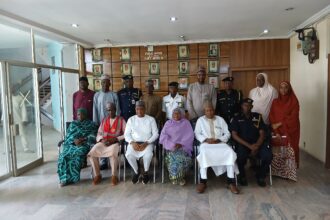
The National Human Rights Commission (NHRC), in collaboration with the United Nations High Commissioner for Refugees (UNHCR), convened a high-level training session for security and government actors in Kano.
The two-day event, held from October 22–23, focused on mainstreaming human rights and humanitarian responses into the operations of agencies working with Internally Displaced Persons (IDPs), refugees, asylum-seekers, and returnees across Nigeria’s North-West region.
Delivering the welcome address, NHRC Executive Secretary Dr. Tony Ojukwu, SAN, who was represented by Dr Benedict Agu a special Assistant to the Executive Secretary of National Human Right Commission, also a Project Coordinator and Head of Monitoring at the Commission emphasized the urgency of coordinated efforts in safeguarding the rights of displaced populations. “The plight of these people caused by insurgency, armed conflicts, flooding, and drought should be of concern to all,” he stated. “Hence, the continuous intervention by NHRC with the support of UNHCR.”
Read Also: President Ahmed Tinubu Declares 9th Edition of National Youth Games Opened
He said the training is part of the ongoing NHRC/UNHCR 2025 Project on the Protection of Human Rights of IDPs, Refugees, Asylum Seekers and Returnees through Information/Data Collection and Documentation in Nigeria.
Dr Ojukwu maintained that the initiative, which began in January 2025, targets the three most impacted Local Government Areas (LGAs) across eleven states: Adamawa, Akwa Ibom, Borno, Benue, Cross River, Kano, Katsina, Sokoto, Taraba, Yobe, and Zamfara.
Dr. Ojukwu highlighted the deployment of Human Rights Monitors (HRMs) and Community Protection Action Group (CPAG) members to these LGAs.
These teams, he noted work closely with UNHCR staff to document protection issues, visit detention facilities, and refer cases to relevant Ministries, Departments, and Agencies (MDAs).
“The project has recorded a good number of targeted responses from MDAs and humanitarian actors,” he noted, underscoring the importance of continued collaboration.
Read Also: NAPTIP Secures Conviction Against Perpetrator of Human Trafficking in Bauchi State
He stated that the engagement aims to improve real-time responses to human rights challenges by fostering stronger links between field monitors and government agencies. “This meeting will also present a learning opportunity for all of us involved in protection and humanitarian interventions,” Ojukwu said. He stressed the need to identify areas of duplicated efforts and redirect resources to underserved communities.
Expressing gratitude to UNHCR for its unwavering support since 2015, Dr. Ojukwu reaffirmed NHRC’s commitment to annual engagements under the project. “We look forward to sustained collaborations henceforth,” he said, encouraging participants to share insights and explore common areas of interest to improve the situation of displaced persons.
Barrister Shehu Abdullahi, Kano Zonal Office Coordinator of the National Human Rights Commission (NHRC), emphasized the importance of collaborative dialogue in his opening remarks. “This stakeholders meeting on refugees was convened to fine-tune the way forward on the issue of migration,” he stated.
“The rights of migrants and their host communities must be protected, and the threat of insecurity posed by migration affects not only the host communities but the region as a whole.”
Mr. Abdullahi added that the meeting forms part of a broader initiative to mainstream human rights and humanitarian responses in the operations of government and security actors.
He added that the discussions focused on strengthening referral pathways, enhancing coordination among agencies, and identifying areas for future collaboration.
The training concluded with a renewed pledge to uphold the dignity and rights of Nigeria’s most vulnerable populations through collective action and strategic partnerships.
The meeting similarly featured participants from the Department of State Services (DSS), Nigeria Immigration Service, Nigeria Customs Service, Nigeria Police Force, and the Nigeria Security and Civil Defence Corps (NSCDC).
Also in attendance were members of civil society organizations (CSOs), non-governmental organizations (NGOs), religious leaders, and traditional rulers underscoring the multi-sectoral approach needed to tackle migration and displacement issues.
Stakeholders explored ways to mitigate security risks while ensuring that humanitarian responses uphold the dignity and rights of displaced persons.
[contact-form][contact-field label=”Name” type=”name” required=”true” /][contact-field label=”Email” type=”email” required=”true” /][contact-field label=”Website” type=”url” /][contact-field label=”Message” type=”textarea” /][/contact-form]