By: Mukhtar Yahaya Shehu
UNICEF has assured its commitment to support Kano state government in eradicating Polio In the state.
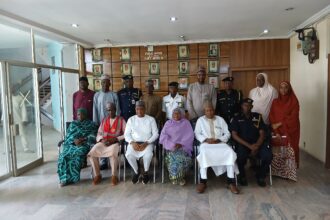
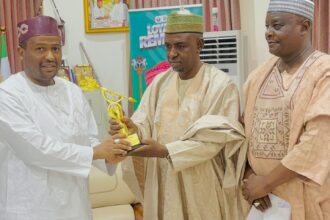
The state field officer Dr Rahma Rihood Mohamed Farah stated this at the June 2025 Media Dialogue on Polio and Routine immunization in kano.
He said the event represents their continuing engagement with the media to solicit support towards the strategic goal of eradicating polio in Kano state and indeed in Nigeria.
According to Dr Rahma Rihood Mohamed Farah media remains a strategic partner in the war against polio
Why?
Because disseminating accurate information on polio is crucial to addressing disinformation, misinformation, rumors and myths, which are all preventing families from accepting the vaccine.

“We want you to tell these families Vaccines are available, they are safe and effective.
And by doing so the media will be helping to ensure that every child under five is vaccinated and protected against polio and other killing diseases,” Dr. Rahma added.
He further said June Polio Vaccination campaign coincides with the Day of the African Child, whose theme is focusing on Child-friendly budgeting.
It is therefore very important to highlight the issue of the significance of adequate resources allocation to the fight against polio.
The UNICEF field officer also said while media deployment of its various channels to share accurate information about the polio and mobilize families to take the vaccine are important, UNICEF urges the media to focus attention on the challenge of non-release, delayed release or lack of utilization of Government Counterpart funding for polio vaccination campaigns and Routine Immunization programme.
“Timely release of counterpart funding for polio vaccination campaign is important to reach every eligible child with the polio vaccine. Polio remains a highly infectious disease with very deadly consequences for young children,” He added.
“One case of polio anywhere in Nigeria is a threat to children everywhere in Nigeria! We must all work together to eradicate polio in Kano state, with special focus on high risk LGAs including Warawa, Bunkure, Kano Municipal and Nassarawa LGAs, These are the LGAs where incidence of a variant of the polio virus has been noticed in 2025.” According to UNICEF
“Let us all remember:
Polio knows no boundaries, knows no borders Polio spreads fast – and an outbreak in any country puts children in every country at risk.
But we can stop outbreaks and eradicate polio if every child is vaccinated.
Ending polio and improving children’s survival starts with making sure all children have access to vaccines.
UNICEF reiterates its request to the Kano State government to take actions:
• To declare a State of Emergency on Polio and Routine Immunization including a commitment to take the leadership to resolve noncompliance issues, provide adequate supervision and timely release of adequate State Counterpart funding for Routine Immunization and polio vaccination campaigns.
• The Chairman, Association of Local Government Chairmen (ALGON) in Kano State, makes commitments on behalf of Kano State LGA Chairmen/person to take the leadership of eradicating polio and ensuring adequate supervision and timely release of adequate funding for polio vaccination campaigns and Routine Immunization.
• All LGA Chairpersons in Kano State should conduct flag-offs of the upcoming polio vaccination campaign in their respective LGAs, supervise the campaign along with their LGA Council, as well as participate in pre-implementation and evening Review Meetings, and engage in non-compliance resolution,” Dr Rahma said.
The UNICEF particularly calls on LGA Chairmen/Chairperson in Kano Sate to honour and implement all the commitments they made publicly in Kaduna early this year.
“Traditional and religious leaders in Kano State make public commitments to halting polio outbreaks and to mobilize communities to vaccinate all eligible children and eradicate polio.
We can realize a future free from vaccine-preventable diseases like polio,
and guarantee children, a future where no child dies from illnesses that we know how to prevent.” UNICEF urged.